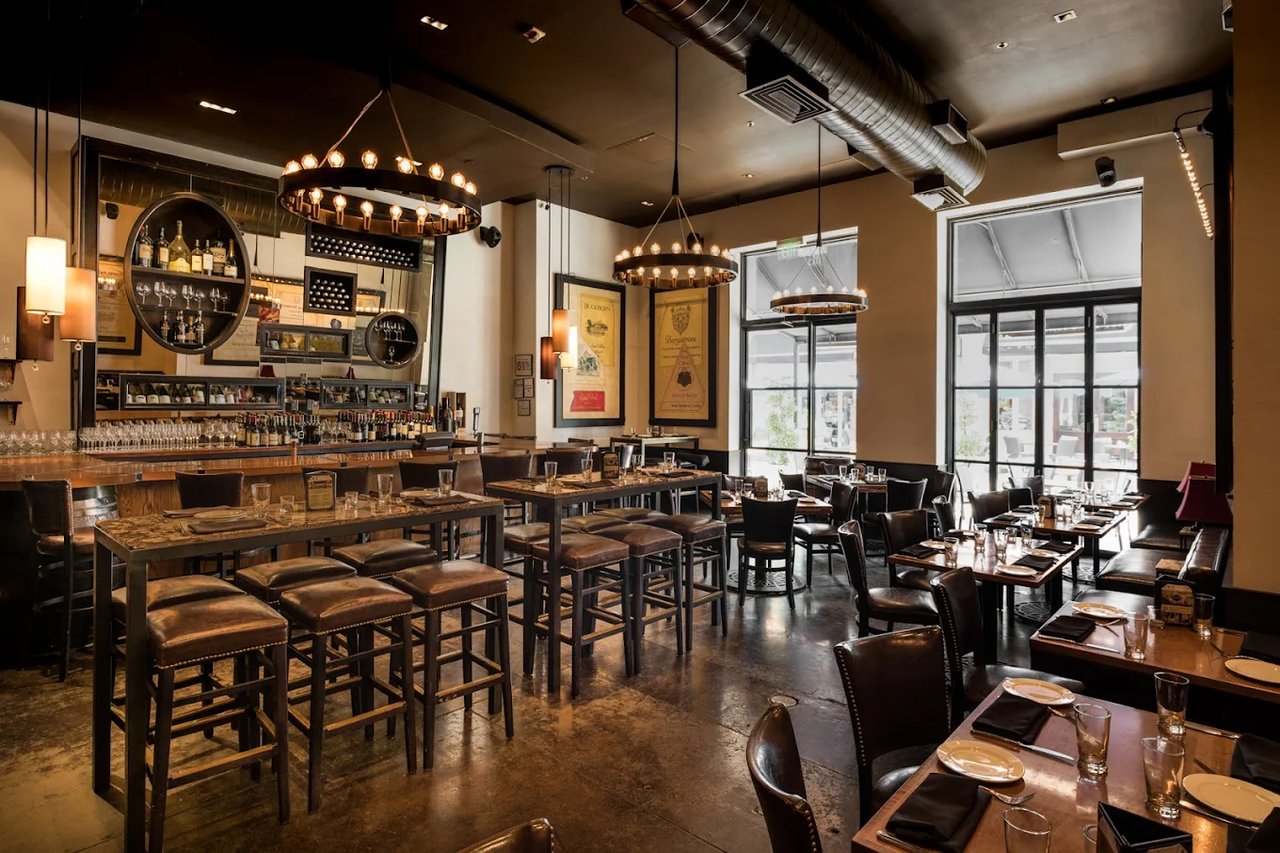
What Fort Worth's 2026 Restaurant Openings Say About the City Right Now
Lifestyle Kemberly McLaughlin August 6, 2026
Lifestyle Kemberly McLaughlin August 6, 2026
Read a national roundup of Dallas-Fort Worth restaurant news and the pattern can feel familiar. Dallas lands the international import, celebrity chef, or members-only concept.
Fort Worth’s 2026 restaurant story looks different and we find it rather tasty news.
A meaningful share of this year’s openings come from chefs and operators who already have roots here. Some are moving from pop-ups into permanent dining rooms. Others are opening second concepts, expanding food-hall businesses, or bringing new life to buildings Fort Worth residents already know.
The story is not that outside restaurant groups have stopped arriving. Several regional and national concepts are opening too.
What stands out is how many Fort Worth operators are choosing to reinvest inside the city, often in established neighborhoods and familiar buildings.
That tells us something useful about the dining market. It also changes how those neighborhoods live.
Look beyond the menus and several themes begin to repeat.
Near Southside may be the clearest example.
Hiroto and Nami Ochiai developed a following through Wednesday-night sushi pop-ups at The Holly before opening Hiro’s Kitchen. Beren Meze & Grill House began in Funky Town Food Hall before moving into the former Maiden space at PS1200. The team behind Bocca Osteria Romana followed its first restaurant with Felina on Bryan Avenue.
In each case, the operator tested an idea, built an audience, and then committed to a larger or more permanent space nearby.
That is not a guarantee that every concept will succeed. Restaurants remain difficult businesses.
It does suggest that these operators believe Fort Worth residents will support more specialized dining within their own neighborhoods.
Near Southside continues to attract some of Fort Worth’s most personal restaurant concepts.
Hiro’s Kitchen grew from Hiroto and Nami Ochiai’s well-received pop-ups at The Holly into a permanent restaurant on West Daggett Avenue.
The concept centers on sushi, sashimi, sake, and an open-kitchen experience. Its appeal comes not only from the food but from the opportunity to interact with the chef and understand what is being served.
This is not a large imported concept designed to be reproduced across several cities. It is a restaurant that grew from relationships already built within the neighborhood.
Felina, from Alessandro and Alfonso Salvatore of Bocca Osteria Romana, opened in the former Funky Town Picnic space on Bryan Avenue.
The restaurant expands beyond conventional pizza with wood-fired Neapolitan-style pies, pasta, and dishes influenced by Italian, Mediterranean, and Latin flavors.
The address is part of the story. Rather than leaving the area after establishing Bocca, the brothers added another concept nearby, contributing to a denser restaurant corridor.
Beren began as a Turkish and Mediterranean stall inside Funky Town Food Hall. In 2026, it moved into a full restaurant space at PS1200 formerly occupied by Maiden.
The transition gives the owners a larger dining room and the ability to expand the menu beyond what a food-hall stall could reasonably support.
It is a useful example of what food halls can do well: provide smaller operators a place to test demand before committing to a full restaurant.
At the Oaks opened inside the historic bungalow at 304 West Cannon Street, formerly home to Cannon Chinese Kitchen.
The independent coffee house offers breakfast and lunch with dishes such as avocado toast, grain bowls, and Italian sandwiches on house-made focaccia.
Its location is quieter and more residential than many Near Southside coffee shops. That makes it less of a pass-through stop and more likely to become part of the surrounding neighborhood’s ordinary routine.
Tinie’s reopened on South Main Street with chef Adrian Burciaga overseeing a refreshed menu and renewed direction.
Burciaga is known locally as a co-founder of Don Artemio. His involvement gives Tinie’s a more chef-driven identity while preserving the restaurant’s place in a restored 1930s building.
Taken together, these openings show why Near Southside continues to feel different from a conventional dining district. The restaurants are not clustered inside one managed development. They are distributed through bungalows, storefronts, mixed-use buildings, and converted commercial spaces.
Downtown Fort Worth’s 2026 restaurant story is tied closely to adaptive reuse.
Several of its most anticipated concepts are opening inside buildings that already carry a strong identity.
The restaurant group behind The Mont is preparing Beverley’s Downtown inside the historic Hogan Building at 901 Houston Street.
The restaurant sits below street level, giving it a distinctly different atmosphere from a traditional downtown storefront. Plans call for Mexican cooking influenced by different regions of the country, supported by a sculptural bar and a richly designed interior.
Earlier coverage projected a summer opening, but the restaurant remained listed as pending into fall 2026. That is a useful reminder that restaurant construction dates are estimates until the doors officially open.
When it does open, Beverley’s will add a destination restaurant near the northern end of downtown and Sundance Square.
Chef Jenna Kinard is leading Madrone inside the restored Fort Worth Public Market building on Henderson Street.
Madrone is planned as the fine-dining centerpiece of a larger group of concepts that also includes Willow, a cocktail lounge, and Public Market Café & Goods.
The menu is expected to draw from Texas ingredients and Kinard’s range of Southern and Southeast Asian influences. Dishes previewed in local coverage include Texas wagyu tartare, Gulf oysters, deviled eggs, and hamachi with mesquite-bean miso.
The Public Market building has waited a long time for a new chapter. The restaurant project is significant because it gives the restored property an everyday use, not simply architectural value.
The opening date remained pending as of late summer 2026, so diners should confirm current information before making plans.
Station & Vine is planned for the historic Texas & Pacific Station at 221 West Lancaster Avenue.
The restaurant’s proposed menu includes steak, seafood, cocktails, wine, and more casual choices, placing a full-service dining experience inside one of downtown’s most recognizable buildings.
Its website lists a fall 2026 opening.
For residents who already know the T&P Station as a transit stop, event setting, or architectural landmark, the restaurant gives the building another reason to remain active outside commuting hours.
The Cultural District is often discussed as though its dining and retail identity is already complete. This year’s changes show that it is still evolving.
Café Mirador opened inside Forty Five Ten at 3220 West Seventh Street.
The Fort Worth café brings several dishes associated with the Dallas location, including its lobster roll, whipped ricotta, and ahi tuna cornettes, with Fort Worth chef Manny Gutierrez leading the kitchen.
It is an example of an outside concept being adapted with local leadership rather than simply copied into a new market.
The combination of fashion, art, lunch, and lounge service also gives the building a broader purpose than either retail or dining alone.
Ave Modern Mediterranean opened in August at Montgomery Plaza.
The restaurant comes from a local hospitality team with experience behind Istanbul Grill and Chefika. Its menu includes Mediterranean and Turkish dishes, cocktails, and wine.
The location has housed several previous restaurants, making Ave’s arrival both an opportunity and a test. The team knows the Fort Worth market, but the address will still need to establish a consistent audience.
Its late weekend hours add something the Cultural District has historically offered only in limited supply: a polished dining option that remains open well into the evening.
Not every meaningful restaurant opening needs to be a large dining room.
Nativo Café y Bodega opened beside Nativo Gardens at 1701 White Settlement Road.
Owner Karla Orta began by selling plants from her vehicle and later her parents’ driveway before developing the nursery and café.
The café’s drinks and food reflect both Mexican heritage and Texas flavors. Its pairing with a native-plant nursery makes it feel less like a conventional coffee shop and more like a small neighborhood destination.
The concept is personal, specific, and difficult to reproduce without the owner’s story. That is part of its appeal.
Flora House is expected to open in fall 2026 inside the Fort Worth Botanic Garden, replacing Rock Springs Café.
Westland Hospitality is overseeing the new concept, with chef Juan Rodriguez of Magdalena’s leading the culinary program.
Plans call for breakfast and lunch, seasonal menus, and the use of herbs and produce connected to the garden.
The restaurant has the potential to make the Botanic Garden part of an ordinary breakfast or lunch plan, not only a destination for exhibits, events, or visiting guests.
Because Flora House was still forthcoming at the time of publication, visitors should confirm its opening and hours directly with the garden.
Neighborhood | Restaurant | Status as of late summer 2026 | What to expect |
|---|---|---|---|
Near Southside | Hiro’s Kitchen | Open | Sushi, sashimi, sake and chef-guided counter service |
Near Southside | Felina | Open | Neapolitan-style pizza, pasta and wood-fired cooking |
Near Southside | Beren Meze & Grill House | Open | Turkish and Mediterranean cooking |
Near Southside | At the Oaks Coffee House | Open | Coffee, breakfast and lunch in a historic bungalow |
South Main | Tinie’s Mexican Cuisine | Reopened | Refreshed chef-led Mexican menu |
Cultural District | Café Mirador | Open | Lunch and lounge dining inside Forty Five Ten |
Cultural District | Ave Modern Mediterranean | Open | Mediterranean and Turkish food with a full bar |
West Fort Worth | Nativo Café y Bodega | Open | Mexican-Texan café beside a native-plant nursery |
Downtown | Beverley’s Downtown | Opening pending | Subterranean Mexican restaurant in the Hogan Building |
Downtown | Madrone | Opening pending | Chef-driven Texas and Southern fine dining |
Downtown | Station & Vine | Expected fall 2026 | Steak, seafood, wine and cocktails in the T&P Station |
Botanic Garden | Flora House | Expected fall 2026 | Breakfast and lunch with a garden-inspired menu |
Clearfork | Piattello Italian Kitchen | Expected late 2026 | Expanded local Italian restaurant with lunch service |
Opening dates change frequently. Confirm current hours, reservations, and locations directly with each restaurant before visiting.
Many of this year’s restaurant stories involve addresses Fort Worth residents already recognize.
This is not development occurring only on open land at the edge of the city. It is reinvestment inside existing corridors and buildings.
Adaptive reuse can preserve some of the character residents already associate with a place while giving the property a new economic and social purpose.
It can also be difficult. Older buildings bring construction surprises, accessibility requirements, infrastructure limitations, and preservation considerations. Those realities are one reason projected restaurant opening dates frequently move.
The eventual result, when it works, is a place that feels connected to Fort Worth rather than inserted into it.
Restaurants are not a direct measure of residential property value.
A new dining room does not automatically raise nearby home prices, and a cluster of openings does not guarantee that every business will survive.
Restaurants can still tell us something about how operators view a neighborhood.
Opening a permanent restaurant usually requires a significant commitment to:
When several experienced local operators make those commitments within the same corridor, it suggests they see enough population, traffic, identity, and repeat business to support the investment.
In 2026, those commitments are appearing across Near Southside, Downtown, the Cultural District, West Fort Worth, Clearfork, and the Botanic Garden.
The pattern is distributed rather than concentrated.
For people who already live in Fort Worth, the practical effect is simpler than the development analysis.
More neighborhoods are gaining restaurants designed for repeat use.
Near Southside residents can move among coffee, sushi, pizza, Turkish food, and Mexican dining without leaving the larger district. Cultural District residents have new lunch and late-evening options. West Fort Worth gains a café connected to a local nursery. Downtown is gradually adding restaurants capable of keeping people in the area after the workday ends.
These may not all be restaurants someone drives across the Metroplex to visit once.
Many are more useful than that.
They are places that can become part of an ordinary Tuesday, a Saturday breakfast, or the reliable dinner choice when no one wants to cross town.
That kind of daily convenience is part of how a neighborhood feels, even when it cannot be isolated on an appraisal.
A long restaurant list is not automatically the same thing as a good lifestyle fit.
When comparing Fort Worth neighborhoods, ask:
The strongest amenity is not necessarily the most photographed opening. It is the one you will genuinely use.
The most encouraging part of Fort Worth’s 2026 restaurant story is not any single menu.
It is the number of local operators choosing to build their next chapter inside the city.
Some are moving from food halls into permanent restaurants. Some are converting pop-ups into full dining rooms. Others are opening second concepts near the neighborhoods that supported the first.
At the same time, older Fort Worth buildings are finding new uses as cafés, restaurants, lounges, and gathering places.
Not every announced project will open on schedule. Not every new restaurant will become a permanent institution. But the direction is worth noticing.
Fort Worth is not waiting for outside brands to create its dining identity. Its own chefs and operators are continuing to shape it, one familiar building and neighborhood dining room at a time.
Silver Elk Realty tracks these changes because buyers and homeowners experience a city through more than market statistics. They experience the coffee shop around the corner, the place they meet friends for dinner, and the familiar building that suddenly has lights on again.
If you are considering a move within Fort Worth, Silver Elk Realty can help you compare not only the homes, but also how the surrounding neighborhoods live from morning through evening.
Schedule a consultation with Silver Elk Realty when you are ready for a calm, informed conversation about where you may feel most at home.
Stay up to date on the latest real estate trends.
Development

Education
The Questions to Research Before Making an Offer
Development

Education
Understanding Foundation Reports and Options
Lifestyle
Mira Vista Country Club's Renovation: What Actually Changed for Residents
Lifestyle
Local Chefs Lead The Way
Experience a seamless real estate journey backed by a dedicated team focused on your success.