Same Price, Different Roof: The Insurance Math Behind Two Fort Worth Listings
September 3, 2026
September 3, 2026
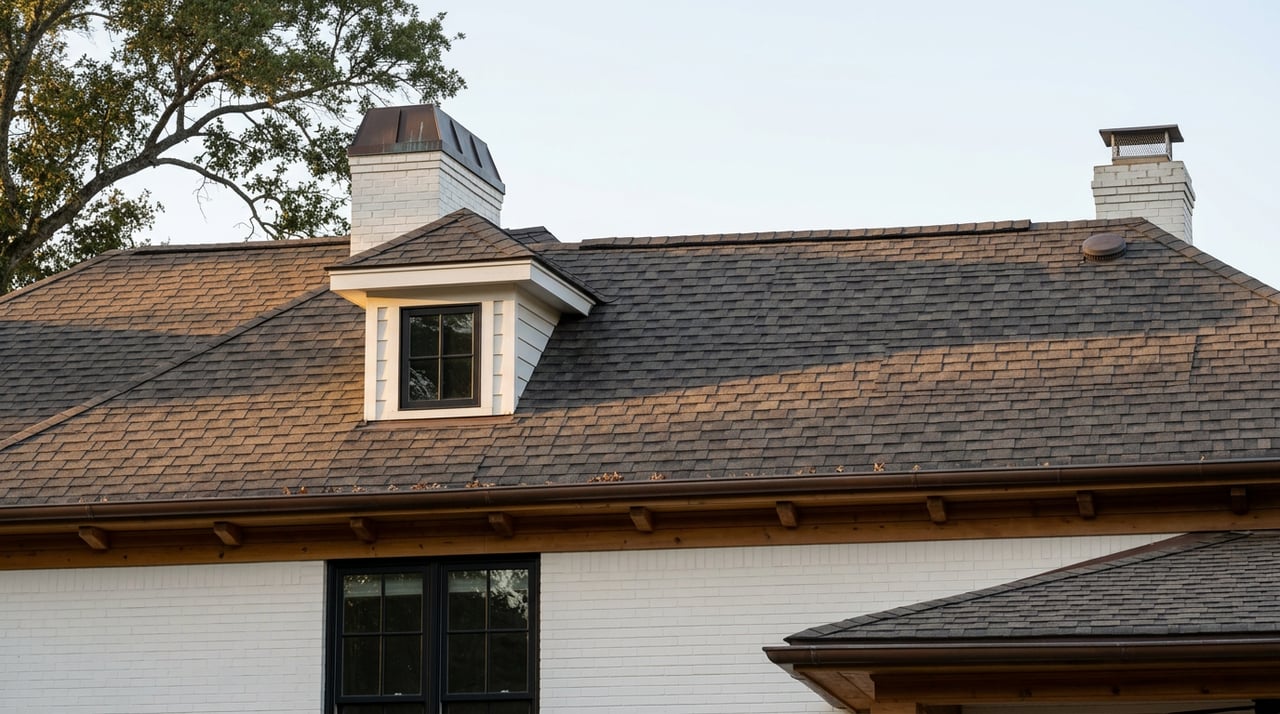
Picture two Fort Worth listings priced at $340,000 apiece, both three bedrooms, both roughly 1,900 square feet, both a reasonable commute to downtown. One sits in Arlington Heights under a roof original to a 1948 build. The other sits in Walsh Ranch under a roof installed last spring. Ask three different independent insurance brokers to quote both houses and you will not get two similar numbers. You will get two different coverage types, two different claim outcomes if a hailstorm rolls through next April, and in some cases a flat refusal to write a policy on one of them until the roof comes off.
That gap has nothing to do with square footage, school zones, or curb appeal. It comes down to a single underwriting line that most buyers never think to ask about until they are sitting across from an insurance agent during option period, wondering why the number on the quote does not match the number they budgeted.
For most of the last decade, roof age was one factor among many in a Texas homeowners quote. In 2026 it has become close to a gatekeeper. Several North Texas brokers now report that most carriers will not write a new Replacement Cost policy on a roof older than 15 to 20 years. Past that threshold, the choices narrow to Actual Cash Value coverage, a rate surcharge, a required pre-inspection, or in some cases a declined application until the roof is replaced.
The distinction between those two settlement types is not academic. A worked example built from Texas Department of Insurance guidance illustrates it cleanly: a 10-year-old roof with an actual cash value of $7,000 gets hit with a $2,000 deductible, leaving a $5,000 payout, versus a new roof priced at full replacement cost. On paper both policies say "hail is covered." In practice one of them leaves a homeowner writing a check for the difference.
This is not a hypothetical risk in Tarrant County. The region sits inside what the insurance industry calls Hail Alley, and Texas logged more major hail events than any other state for the eleventh consecutive year in 2024. A roof's age is not a maintenance footnote here. It is the single biggest variable in what a policy actually pays out.
Fort Worth is not one insurance market wearing one price tag. It is layered, and the layers track almost exactly with the neighborhoods buyers are already comparing on price and lot size.
| Vintage and area | Home era and roof-age pattern | What carriers tend to offer | Class 4 shingle discount available |
|---|---|---|---|
| Fairmount, Arlington Heights (1920s–1950s) | Homes are 70 to 100+ years old; actual roof age depends entirely on last replacement, since a roof this old on an unaltered home would be nonfunctional | ACV common once the current roof passes 15–20 years since installation; some carriers require inspection | Yes, if roof was recently replaced with rated material |
| Wedgwood, Ridglea, and similar mid-century stock | Homes are mid-century era; roof age again tracks the last replacement rather than the build date | Mixed. Replacement Cost available with a recent roof, ACV without one | Yes |
| North and southwest Fort Worth suburban builds (1980s–1990s) | Roofing stock here is newer than the historic and mid-century core but frequently approaching the 15 to 25 year replacement window | Transitioning from Replacement Cost to ACV as the roof ages past the cutoff | Yes, if not yet replaced |
| Walsh Ranch, Presidio, Haslet corridor, Alliance-area new construction | The most recently built roofing stock in the market | Replacement Cost standard, most competitive rates in the market | Often built in at construction |
The historic core does not lose on every line. A well-maintained bungalow with a recent roof can out-price a suburban home coasting on an aging original roof from the 1980s or 1990s building boom. But the pattern holds directionally: the newer the roof, the more coverage options a carrier will offer, and the newer construction corridors west and north of the city currently sit closest to the front of that line.
Roof age decides what type of coverage a home qualifies for. The deductible structure decides what a claim actually costs the homeowner once that coverage exists. Most Fort Worth policies now carry a wind and hail deductible stated as a percentage of dwelling coverage rather than a flat dollar figure, commonly 1 to 2 percent. On a home insured for $400,000, a 2 percent deductible means the first $8,000 of any hail claim comes out of pocket before the policy pays a dollar. Drop to a 1 percent deductible and that exposure falls to $4,000, usually in exchange for a higher annual premium.
Run that math against the roof-age table above and the real cost of a listing starts to look different than its price tag suggests. A buyer choosing between a Wedgwood ranch with an aging roof and a comparably priced new build in the Alliance corridor is not just choosing a commute and a floor plan. They are choosing between a policy that pays a depreciated claim on top of an $8,000 deductible, and one that pays full replacement cost with the same deductible sitting on a roof unlikely to need a claim for another decade.
The list price tells you what the seller is asking. The roof's age tells you what you'll actually be paying every spring after the first hailstorm finds your house.
The state-level trend gives this some context. Texas homeowners insurance rates rose 21.1 percent in 2023 and 18.7 percent in 2024 before slowing to 4.3 percent in 2025, according to the Texas Department of Insurance's own rate change data. Federal Reserve Bank of Dallas researchers separately found the median Texas homeowner paid roughly 60 percent more for coverage in 2024 than in 2019, double the national increase over that period. Rates are not falling. They are simply climbing more slowly than they were two years ago, which makes the roof-age variable more consequential rather than less. When the baseline is already high, the gap between a Replacement Cost policy and an ACV policy is the part a buyer can still influence.
None of this argues against buying in Fairmount or Wedgwood, and it does not argue that Walsh Ranch is automatically the better financial decision. It argues for asking a question earlier in the process than most buyers think to ask it.
The buyers who get surprised by this are rarely careless. They are simply following the instinct every portal and every listing sheet trains into them, which is to compare price first and everything else after. Insurance underwriting does not run on that timeline. It runs on the roof's actual birth year, and by the time that number shows up on a declarations page, the earnest money is usually already down.
Does every home in an older Fort Worth neighborhood get stuck with ACV coverage? No. A recently replaced roof on a 1930s Fairmount home can qualify for the same Replacement Cost terms as new construction. Age of the structure and age of the roof are not the same number, and carriers price on the roof.
Is new construction automatically cheaper to insure? It tends to start with more coverage options and better pricing, but home value, square footage, and claims history in the surrounding area still factor in. A newer roof widens the choice of carriers rather than guaranteeing the lowest premium.
Should I get an insurance quote before I make an offer or after? Before, whenever the timeline allows it. Once under contract, requesting a quote during option period rather than waiting until just before closing gives a buyer room to renegotiate, request repairs, or walk away if the roof forces an unexpected coverage change.
Working through this kind of comparison is exactly the conversation worth having before an offer goes in, not after. If you are weighing a Fort Worth listing against a new build and want the real cost side by side, not just the list price, Silver Elk Realty can walk through it with you. Schedule a Consultation and bring the addresses. We will help you ask the roof question early enough for it to matter.
Stay up to date on the latest real estate trends.
Experience a seamless real estate journey backed by a dedicated team focused on your success.