Panther Island Is Finally Breaking Ground. Here's Why Your Property Taxes Won't Feel It Yet
Development Kemberly McLaughlin September 17, 2026
Development Kemberly McLaughlin September 17, 2026
For more than a decade, Coyote Drive-In gave Fort Worth families a place to watch movies beneath the skyline on the north bank of the Trinity River. Its final screening on September 7 marked the end of that tradition, but it also marked something larger for Panther Island.
Land is changing hands. Contractors are being selected. Infrastructure plans are moving toward construction.
For anyone who has followed Panther Island through years of proposals and renderings, the closing of Coyote Drive-In may be the clearest signal yet that the project is becoming physical.
That naturally raises a real estate question:
If a billion-dollar redevelopment is moving forward near downtown Fort Worth, are nearby property values already rising with it?
The honest answer is more complicated than the headline. Panther Island may create meaningful long-term opportunity, but future potential and present-day market value are not the same thing. Before buyers or homeowners assign a premium to the project, it helps to understand what is actually funded, how the financing works, and what nearby homes are currently selling for.
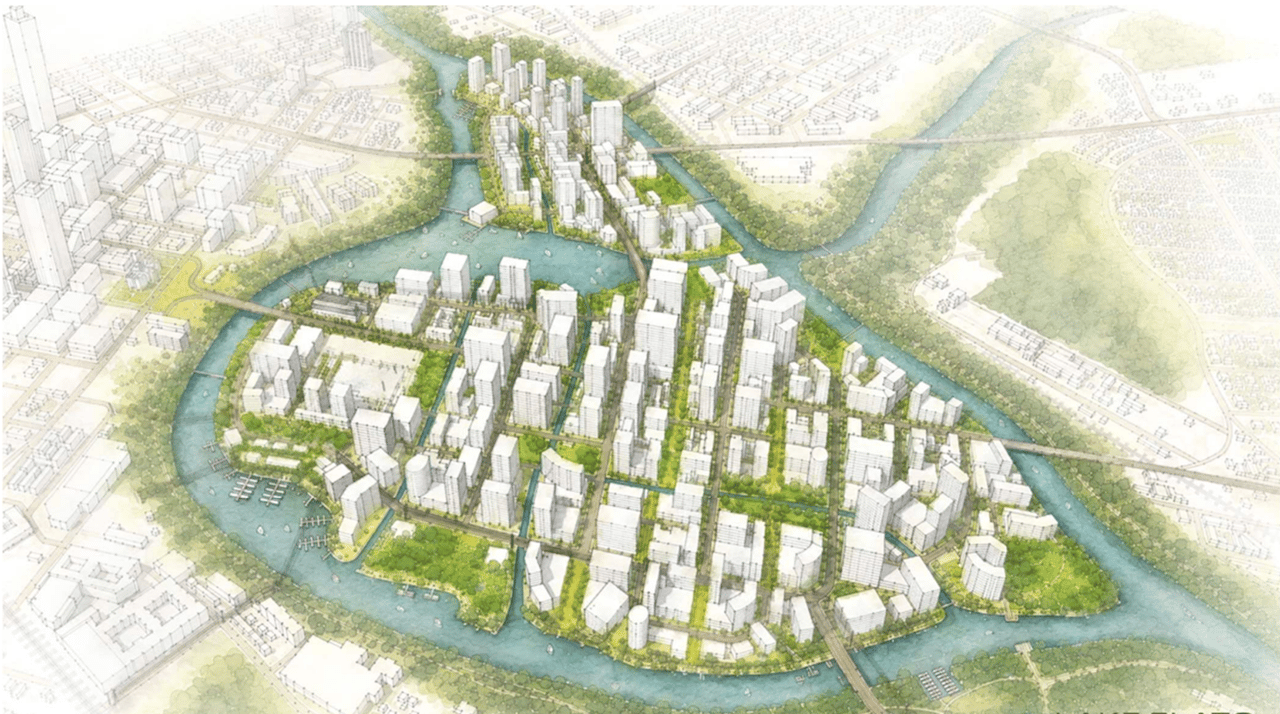
At the center of the Panther Island project is a roughly 1.5-mile bypass channel that will redirect part of the Trinity River. The channel is intended to improve flood protection while creating the physical island around which future development will occur.
The U.S. Army Corps of Engineers opened the North Bypass Channel work for contractor bids in 2026. The broader plan includes canals, bridges, parks, roads, utilities, pedestrian connections, and new residential and commercial development across approximately 500 acres north of downtown.
Fort Worth has also been updating the area’s zoning and development standards through Panther Island Vision 2.0. The purpose is to move the project from a long-range vision into something the city can actually regulate, build, and support.
Some infrastructure is already underway or in design. Other pieces will unfold over many years. For example, the city reports that Canal C is scheduled for completion in early 2028, with two related canal bridges expected to follow. Fort Worth Panther Island Canal Bridges project
This is meaningful progress. It is also a reminder that Panther Island is not one construction project with one completion date. It is a collection of public and private projects that will move forward in phases.
A large part of Panther Island’s infrastructure is supported through Tax Increment Reinvestment Zone No. 9, commonly called a TIF.
The city established the zone in 2003. At that time, the taxable value within its boundaries became the base value. As taxable property values increased above that base, participating taxing entities agreed to direct a portion of the additional revenue, or “increment,” into a dedicated fund for improvements within the district.
The TIF does not create a separate tax rate for homeowners. It determines where part of the collected tax revenue from growth inside the zone is directed.
According to the City of Fort Worth, the participating entities currently contribute 80% of their eligible increment. They include:
The zone has experienced substantial growth. The city reports a 2003 base taxable value of approximately $130.7 million and a 2023 taxable value of more than $1.02 billion. The TIF term has also been extended through 2054, giving the district a long runway for financing infrastructure and reimbursing eligible project costs.
That does not mean homeowners receive a lower tax rate as property values rise. It means participating entities have committed part of the additional revenue generated inside the zone to the zone’s infrastructure.
In June 2026, the Fort Worth City Council approved an economic development agreement supporting a proposed Seco Ventures project at North Main and Northeast Fourth streets.
Plans call for an approximately $100 million, 12-story development with roughly 290 apartments and ground-floor retail. The city described it as a potential catalyst for additional Panther Island investment.
The agreement provides performance-based grants that could total as much as $1 million annually for up to ten years. The grants would be tied to a portion of the incremental city property-tax revenue generated by the project and would be available only under the conditions established in the agreement.
That does not necessarily mean the development is financially unsound. Large redevelopment districts frequently use public incentives to encourage the first major private projects, particularly when developers are taking on infrastructure, timing, or market risks that later projects may not face.
It does tell us something important, however:
The city is still working to create the conditions that will attract and support large-scale private development.
Panther Island may become a highly desirable mixed-use district. Today, it remains a long-term redevelopment effort whose first major projects are still being assembled.
That distinction matters when evaluating nearby real estate.
Renderings can influence expectations. Closed sales establish market value.
Fort Worth’s estimated average home value was approximately $298,353 at the end of July 2026, about 2% lower than the year before. In Northside neighborhoods bordering Panther Island, the trailing 12-month median sale price for existing homes was approximately $242,450, about 7% below the preceding 12-month period.
At the same time, new-construction listings in the surrounding area carried a median asking price closer to $330,000.
Placed side by side, those numbers show an important gap:
Builders may be pricing new homes according to construction costs, product differences, incentives, and expectations for the area’s future. But an asking price is not the same thing as a closed comparable sale.
So far, the resale data does not clearly show a broad Panther Island premium for existing homeowners. That premium may develop over time, but buyers should be careful about paying for appreciation before the comparable sales support it.
Milestone | Status |
|---|---|
TIF District 9 established | 2003 |
TIF term extended | Extended through 2054 |
Panther Island Vision 2.0 zoning update presented | June 2026 |
Seco Ventures development incentive approved | June 2026 |
North Bypass Channel contractor selection | Expected in 2026 |
Coyote Drive-In closed | September 7, 2026 |
Initial bypass-channel construction | Anticipated to begin in late 2026 |
Canal C completion | Scheduled for early 2028 |
Canal bridge construction | Expected to follow Canal C |
Broader flood-control and district buildout | Phased over the remainder of the decade and beyond |
Project schedules can change as contracts, funding, engineering, and construction progress. Buyers should verify the latest timeline when proximity to Panther Island is a meaningful part of their decision.
Panther Island is a significant investment in Fort Worth’s future. After years of planning, federal, state, and local efforts are beginning to converge around visible construction.
That is encouraging. It is not the same thing as guaranteed short-term appreciation for every nearby property.
If a listing emphasizes proximity to Panther Island, consider asking:
Future amenities can be part of a buying decision. They simply should not replace an analysis of the home, the block, the surrounding neighborhood, and the most relevant closed sales.
The same discipline applies when preparing to sell.
Panther Island may strengthen the story surrounding a property, especially as construction becomes more visible and new amenities take shape. That story can help buyers understand the area’s long-term direction.
It should not be used to stretch the price beyond what an appraiser or well-informed buyer can support.
A home priced from recent, relevant comparable sales is more likely to withstand appraisal and negotiation than one priced primarily around future development. The strongest strategy may be to use Panther Island as part of the property’s positioning while allowing the current market to establish its value.
No. The TIF does not establish a separate tax rate.
It directs a portion of the additional tax revenue generated by growth above the district’s 2003 base value into a fund used for eligible improvements within the zone.
Your tax bill is still affected by your property’s appraised value, exemptions, and the rates adopted by the applicable taxing entities.
Fort Worth ISD is not listed by the city as a participating entity in Panther Island TIF District 9.
The participating entities are the City of Fort Worth, Tarrant County, Tarrant County College, the Tarrant County Hospital District, and the Tarrant Regional Water District. Each currently contributes 80% of its eligible increment.
No development can guarantee appreciation.
Panther Island could increase demand and support long-term investment in surrounding neighborhoods. The effect on an individual home will still depend on its location, condition, improvements, lot, neighborhood competition, interest rates, buyer demand, and the comparable sales available when the property is sold.
Panther Island is no longer only a concept. Fort Worth is moving into a period when residents will see land cleared, infrastructure built, and new private development begin to take shape.
That makes the project worth watching.
It does not mean every nearby home has already gained a Panther Island premium, nor does it mean buyers should ignore the area’s long-term potential. It means both sides of the decision deserve to be examined.
At Silver Elk Realty, we help buyers and homeowners separate current market value from future possibility. If you are comparing a home near the Trinity River corridor with another Fort Worth neighborhood, we can review the actual comparable sales, planned improvements, TIF boundaries, and timing associated with the specific address.
Schedule a consultation with Silver Elk Realty before allowing tomorrow’s rendering to determine today’s price.
Stay up to date on the latest real estate trends.
Development

Education
The Questions to Research Before Making an Offer
Development
Education
Understanding Foundation Reports and Options
Lifestyle
Mira Vista Country Club's Renovation: What Actually Changed for Residents

Lifestyle
Local Chefs Lead The Way
Lifestyle
Mira Vista's Lifestyle Choices Have Expanded
Experience a seamless real estate journey backed by a dedicated team focused on your success.