Why Mira Vista's Median Home Price Can't Agree With Itself
September 10, 2026
September 10, 2026
Pull up two real estate data pages for Mira Vista on the same afternoon and you may walk away with two entirely different impressions.
As of late summer 2026:
One report suggests a substantial increase. Another describes modest appreciation. A third shows asking prices moving slightly lower.
Which one is right?
Potentially, all three. They are measuring different things across slightly different periods, data sources, and property groups. More importantly, they are attempting to summarize a small luxury neighborhood where only a handful of homes may sell in any given month.
The problem is not necessarily the math. It is how quickly a small group of very different sales can change the answer.
Fort Worth records thousands of home sales across a broad range of neighborhoods and price points. That volume helps stabilize citywide statistics.
One unusually high or low sale may influence a block or subdivision, but it will barely move Fort Worth’s overall median.
Mira Vista does not have that statistical cushion.
Redfin reported only six Mira Vista sales in August 2026, compared with seven during the same month the previous year. Earlier months showed similarly limited activity.
With that few transactions, one golf-course estate can substantially change the median. So can a month dominated by smaller homes near the entrance or older properties requiring significant updates.
That does not make the reported number false. It means the number describes the homes that happened to close during that period. It may not describe the value trend for every home inside Mira Vista.
This distinction becomes especially important when a monthly percentage is repeated without the number of sales behind it. A 30% or 40% change sounds conclusive. In a neighborhood with only five or six closings, it may be describing a change in the type of homes sold rather than a comparable increase in value.
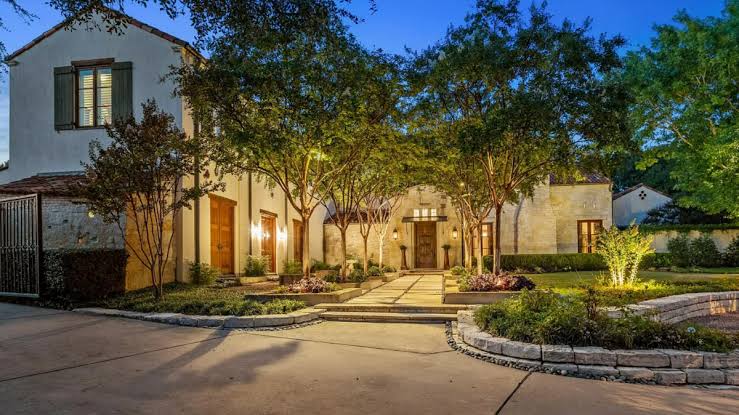
Mira Vista is often discussed as if it were one uniform luxury market. Inside the guarded entrance, however, buyers encounter a wide range of properties.
The community includes traditional homes built primarily during the 1990s and early 2000s, smaller properties nearer the entrance, extensively renovated homes, golf-course residences, newer custom construction, and large private estates.
Prices can begin well below $1 million and extend beyond $3 million, depending on:
Those differences matter more than a neighborhood-wide median.
A newer architect-designed home on a large golf-course lot is not an appropriate substitute for a traditional 1990s home closer to the front gate, even if both addresses are labeled Mira Vista by a consumer real estate website.
When the number of monthly sales is limited, mixing those properties together can produce dramatic changes that look like appreciation or depreciation but are largely the result of which price tier was active.
Online market reports often place several different measurements next to one another, but the measurements are not interchangeable.
The median sale price represents the midpoint of the homes that actually closed during the reporting period. Half sold above the median and half below it.
In a small neighborhood, the median can move sharply when the mix of closed homes changes.
The average adds the prices of all closed sales and divides the total by the number sold. One particularly expensive estate can pull the average significantly higher.
This makes the average especially vulnerable to outliers in a luxury neighborhood.
A modeled home-value index, such as Zillow’s Home Value Index, is not simply the median of the month’s closed sales. It uses property-level estimates and statistical modeling to track the value of a typical home over time.
That can make the number less volatile, but it remains a modeled estimate rather than the price at which a particular property would necessarily sell.
The median listing price reflects what current sellers are asking. It does not show what buyers ultimately agreed to pay.
Listings can also include a different mix of properties than the homes that recently closed.
Each measurement answers a different question. The trouble begins when they are presented as if they all measure the same version of value.
The contrast becomes clearer when Mira Vista is compared with Fort Worth as a whole.
Redfin reported a three-month median sale price of approximately $332,000 for Fort Worth through August 2026, down about 2.1% from the same period a year earlier.
That citywide figure is built from a much larger pool of transactions. While no statistic tells the entire story, thousands of sales create a more reliable trend line than five or six closings in one luxury neighborhood.
The Texas Real Estate Research Center also reported that the broader Fort Worth-Arlington market had posted a second consecutive month of year-over-year price gains by mid-2026. That suggests stabilization in the larger market, but it should not be used to assume that every neighborhood or price tier is moving at the same pace.
Fort Worth can be relatively stable while Mira Vista produces large monthly percentage changes. Those statements are not contradictory. They are the result of very different sample sizes and property mixes.
A neighborhood-wide median can provide context, but it should not be the final answer in a community as varied as Mira Vista.
A more useful analysis goes one layer deeper.
Location within Mira Vista matters. A larger, more private lot on Sanctuary Lane may attract a different buyer than a home closer to the front gate. Golf-course position, traffic exposure, views, and neighboring properties should all be considered.
A substantially original 1990s home should not be valued against a recently built architectural property simply because their square footage is similar.
Renovation quality also matters. Cosmetic updates, a full interior renovation, and new custom construction represent three different value propositions.
Price per square foot can be helpful when it is used among genuinely similar homes. It becomes less reliable when smaller renovated homes, large estates, and newer custom construction are blended together.
Larger homes frequently sell for a different price per square foot than smaller homes. Lot value and outdoor amenities can further distort the comparison.
A home priced below $1 million and an estate priced above $3 million do not necessarily have the same buyer pool or expected marketing time.
Looking at one neighborhood-wide average can conceal how differently the individual price tiers are behaving.
Before relying on any percentage, ask how many sales produced it.
If only two or three genuinely comparable homes have closed during the past six months, those properties should be examined individually. Their condition, lot, concessions, financing, and original asking prices may tell more than the neighborhood median.
Not by itself.
A lower median may mean that more homes in the neighborhood’s lower price ranges sold during that period. It does not automatically mean a comparable home lost the same percentage of its value.
To establish depreciation, we would want to see similar homes selling for less under reasonably similar market conditions.
Again, not by itself.
If several large estates or newly built homes close during one reporting period, the median may rise dramatically even if values for traditional resale homes remain relatively steady.
The median tells us where the midpoint of that period’s sales landed. It does not measure appreciation for every property behind the gate.
Begin with the few homes that most closely match the property’s location, age, size, condition, lot characteristics, and architectural quality.
Then look closely at each sale:
In a thin market, pricing requires more interpretation, not less.
No. The same statistical effect can occur in any smaller luxury neighborhood where sales are infrequent and property values vary widely.
Mira Vista is simply a particularly clear Fort Worth example. A relatively small number of transactions is being used to summarize homes that can differ by several million dollars in value.
A median sale price becomes more useful when enough comparable transactions support it. In Mira Vista, a single month rarely provides that depth.
The better question is not simply whether the neighborhood median moved up or down.
Ask:
Which homes sold, what made them different, and how closely do they compare with the property being evaluated?
That is where the useful market story begins.
If you are considering a move into Mira Vista or deciding how to position a home for sale, Silver Elk Realty can help you look behind the headline. We will walk through the actual comparable sales, explain the differences between them, and help you determine what the current market means for your specific property and your long-term plans.
Schedule a consultation with Silver Elk Realty to begin with the homes behind the numbers.
Stay up to date on the latest real estate trends.


Development

Education
The Questions to Research Before Making an Offer

Development
Experience a seamless real estate journey backed by a dedicated team focused on your success.